

About Giant Union Rock
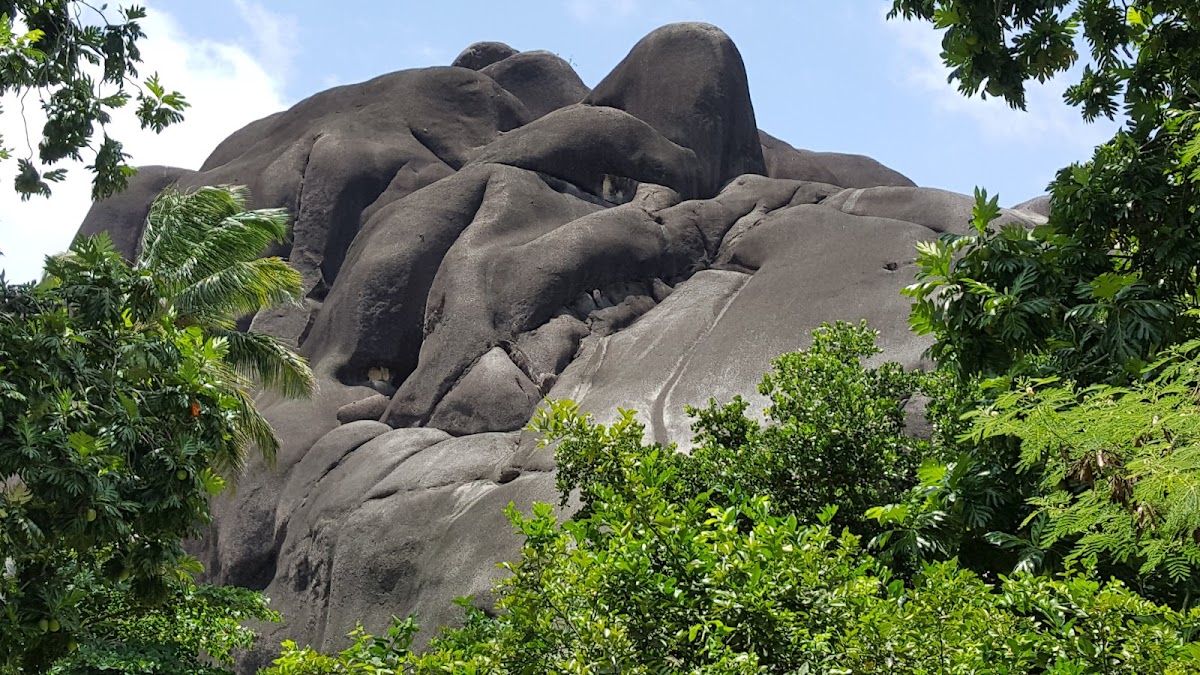
Giant Union Rock is a natural granite formation on La Digue, situated near La Passe on the island's busy northern shore. It belongs to the chain of weathered granite outcrops that define the inner Seychelles landscape, drawing visitors who move through La Passe by foot or bicycle as they explore the coastline. The rock itself is the main draw, set within the kind of open coastal scenery the island is known for.

The Granite Character of Giant Union Rock
Like the great boulders found at other points along La Digue's coast, Giant Union Rock has been shaped over millennia by wind, salt, and shifting tides. Its surface is smoothed and rounded in the way typical of Seychellois granite, with tonal variation across the stone that changes in different light. The surrounding setting combines pale sand, turquoise water, and tropical vegetation including takamaka trees, framing the rock in the layered textures that make this part of the Seychelles visually distinctive. The atmosphere is generally quiet, suited to unhurried observation rather than structured activities.

Reaching Giant Union Rock on La Digue
La Passe is the arrival point for the ferry from Praslin, making Giant Union Rock accessible from the jetty on foot or by rented bicycle, which is the most common way to move around La Digue. No entrance fee applies to the site. The rock is best visited in the morning when light falls directly on the stone and coastal colours are at their clearest. Visitors should carry water, as shade along the route can be limited. For those traveling from Mahé, IslandTour Seychelles, a Mahé-based family business operating licensed 7-seater vans, can assist with the onward connection to the Praslin or La Digue ferries.

📷 Photos

📍 Location
JRPG+9HV, Anse Reunion, Seychelles, La Passe, La Digue, Seychelles Get Directions
🗺 Is the pin in the wrong place? We'd really appreciate your help — drag the marker to the correct spot and let us know. We review every suggestion and update the listing when it checks out.
💬 Reviews & Ratings
Know something about this entry?
Rate it, share what you know, or both — anything you know about this business, recent updates, or your experience. Submissions appear after moderation.
Frequently Asked Questions
The listing says Giant Union Rock is on La Digue, but it's categorised under Mahé — which island is it actually on?
The description places Giant Union Rock near La Passe on La Digue, which is a separate island from Mahé. The listing's location field appears to contain a categorisation error. Visitors should verify the correct island before arranging transport, as travel to La Digue from Mahé requires a ferry from the Inter Island Quay in Victoria.
Does reaching Giant Union Rock near La Passe require a vehicle, or is it accessible on foot or by bicycle?
According to the description, visitors moving through La Passe typically reach the rock on foot or by bicycle, which are the standard modes of travel along La Digue's northern shore. No vehicle hire appears to be necessary for this specific attraction.
Is there an entrance fee or any permit required to view Giant Union Rock?
No entrance fee or permit is mentioned in the available listing information for Giant Union Rock. As a natural granite formation on the coastline, it appears to be openly accessible, but visitors should confirm locally whether any access conditions have changed.
Are there any facilities — toilets, refreshments, or shaded rest areas — at or near the Giant Union Rock site?
No specific on-site facilities are mentioned in the listing description for Giant Union Rock. La Passe is noted as a busy area of La Digue, so some amenities may be available nearby, but visitors should not assume facilities are present at the rock itself.
What should a visitor bring or wear when going to see Giant Union Rock on the coast?
Given the open coastal setting and granite surfaces described, sturdy footwear with grip is advisable as the smoothed rock faces can be slippery. Sun protection, water, and light clothing suited to tropical heat are practical essentials for any daytime visit to an exposed site of this type in Seychelles.
Can the tonal and surface changes of the granite at Giant Union Rock be seen clearly at any time of day, or does lighting matter?
The description specifically notes that the tonal variation across the stone changes in different light, suggesting the appearance of the rock shifts depending on the angle and quality of sunlight. Morning or late-afternoon light is generally considered more favourable for observing surface texture and colour variation on pale granite in open coastal settings.

Don't see your business listed?
Add your business to the Commercial Register — it takes less than a minute and your listing goes live after our team reviews it.
+ Add your business